HEY, I DO LOVE L.A.
My first trip to Los Angeles was with Uncle Green. We had a few dates on the West Coast, booked by my alter ego, Ed Harley. The routing was not the best (Los Angeles to San Francisco back down to Long Beach, if I remember correctly), and Ed’s endearing contracts were rarely signed, never mind returned.
Because yes, this pre-attaching PDFs to emails and doing things that way.
The first Los Angeles show was at a club called (really) Coconut Teaszer, and we were first of maybe 28 bands that night. Booking agents with ties to Europe were going to watch us play, and then, of course, we were sure, book a tour of the U.K. They actually made it for our 7:30 start, but no huge tour of the U.K.followed. We played to maybe twenty people, and then had to sit around for many hours waiting for the hundred dollars we were owed. I finally cornered the club manager close to midnight, and learned he did indeed look just like his Donald Fagen, rumored to be his estranged brother. He peeled off a twenty with a look that dared me to challenge him.1
Other L.A. shows went better; turns out it’s a lot more fun to play withThe Reivers or Matthew Sweet in Los Angeles than the various metal bands we played with at the Teaszer. I even lived out there for a month, recording Book of Bad Thoughts. We indulged in some of the lesser aspects of L.A., eating at Cheesecake Factory, and watching a taping of a terrible Dweezil Zappa sitcom, the gone-too-soon NormalLife:
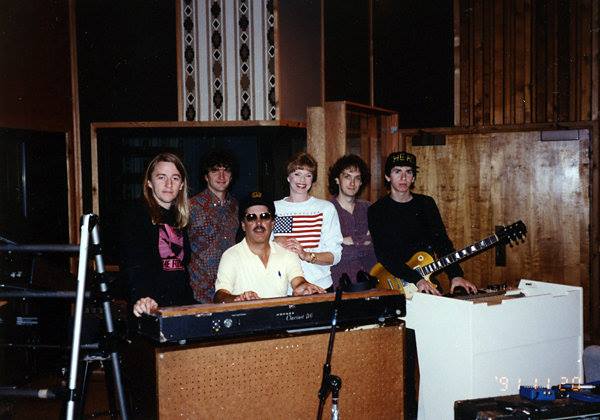
But also met the Captain & Tennille, which is one of the biggest wins notched on the West Coast.
A few weeks ago I returned to L.A. to hold my first book event west of the Mississippi—and it was even better than having a picture with Toni Tennille. The event was sponsored by Wild Honey Foundation, and if you want the perfect setting for music and talking about books, I suggest you look for a cool backyard amphitheatre in the hills of California. I was in conversation with Dan Wilson, who I first met forty years at The Blue Note, in Springfield, Missouri, when Uncle Green opened for TripShakespeare.1 Talking to Dan, who has spent his life mastering the art of songwriting, about Calvin, who spends so much of King Cal trying to figure out how to develop his songwriting, was great, and the fact that we were were able to do so outside, on a beautiful afternoon in L.A., felt like a gift.
And then he sang "Full of Empty," backed by a band of talented L.A. musicians. This was a song that came relatively late in the writing of the book, when I realized Calvin had been working on the lyrics during his shift at Burger Buddies. It was wonderfully surreal to hear the song I first heard writing in my head played on the Wild Honey stage:
Kris Hauch, the one and only Norway House, also made it to the show, and performed a solo version of "Digital Meltdown." In the book, this is written as a new closing song for their set, with kitchen sink-type production, and I loved hearing it stripped down to its bones:
The trip was a huge leap forward from playing an empty metal club and getting stiffed by Donald Fagen's bitter brother. There will be more chances to talk about King Cal in future, of course, but the trip also felt like a nice bookend to the first event, the Atlanta launch with full band. Eighteen events in total, from Nyack to Los Angeles: Calvin had a very good year, indeed.
1. If this story sounds familiar, it’s because the night became perhaps the most autobiographical chapter of The Weight of Sound.
2. I wish I could remember the name of the guy who booked The Blue Note, so I could thank him properly here. I was still booking the band myself, at the time, and not only did he agree to talk to me, he listened to the tape I sent and wound up putting us with the perfect band. We became great friends, and Trip’s road manager/soundman, Brad Kern, proved to be a beautiful human, and helped us get other Midwest gigs. I've also now been "In Conversation" with 2/3 of Semisonic, so John Munson is officially on alert.


